
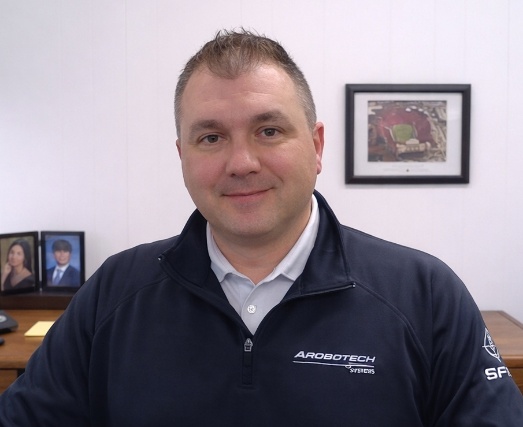
By Jonathan Schack
Sales Director, Arobotech
Insight on grinding applications, workholding solutions, and market trends in manufacturing.
The demand for large crankshaft grinding isn’t just returning. It’s being reshaped by some of the biggest industrial trends in the market today.
From AI-driven power generation to renewed investment in shipbuilding and energy infrastructure, the size, complexity, and importance of these components is increasing.
At Arobotech, we’re seeing this shift play out in real time.
Over the past couple of years, Arobotech has seen a clear shift in demand across multiple industries, bringing large crankshaft workpieces back into focus.
These are not typical automotive components, but shafts with diameters of 150 mm and above, used in applications such as power generation, marine propulsion, and heavy industrial systems.
This is not an isolated trend. It reflects a broader shift in the market, where increasing power demands, infrastructure investment, and equipment scale are driving renewed focus on larger, more complex rotating components.
What’s Driving the Shift?
Power Demand Is Reshaping Manufacturing Priorities
The rapid expansion of AI infrastructure is having a real, physical impact on manufacturing.
As hyperscale data centers continue to grow, so does the demand for reliable, large-scale power generation. Companies like Caterpillar are seeing significant growth in their power generation business, with demand for large generator systems rising sharply, driven in part by AI data center expansion.
Recent reports highlight that power generation sales have surged, fueled by strong demand for large generator sets used in data center applications. In response, Caterpillar is investing heavily to expand production capacity and support long-term infrastructure projects tied to this growth.
Behind every generator system are critical rotating components. Many of these rely on large, high-precision crankshafts.
This is translating directly into increased grinding activity on larger diameters, tighter tolerances, and more demanding process requirements.
Marine and Shipbuilding Activity Is Accelerating
At the same time, global shipbuilding is seeing renewed investment, driven not only by commercial demand but also by government-backed initiatives aimed at rebuilding maritime capacity.
In the United States, recent policy direction has focused on revitalizing domestic shipbuilding as a matter of economic and national security. Federal efforts now include plans to expand shipyard capacity, strengthen the workforce, and increase the number of U.S.-built vessels entering service.
U.S. shipbuilding plans alone represent tens of billions of dollars annually, signaling a strong and sustained pipeline of demand.
This is already translating into real activity. Shipbuilding plans and funding levels are increasing, with investment flowing into naval and commercial vessel production, as well as the broader maritime supply chain.
Globally, similar pressures are at play. Defense spending, energy transport, and supply chain resilience are all contributing to increased shipyard activity.
At the component level, this drives demand for large rotating systems, particularly engine crankshafts that are not only large in diameter, but also long, heavy, and prone to deflection during machining and grinding.
This creates a clear challenge: maintaining concentricity and roundness across the entire workpiece.
A Different Kind of Grinding Challenge
Large crankshafts behave differently.
- Increased part weight leads to sagging (deflection under its own weight), especially across longer spans
- Longer lengths can amplify runout and stability issues
- Surface finish and size control can become harder to maintain consistently
Traditional workholding approaches often struggle to keep up, especially when pushing for higher throughput or tighter tolerances.
Where the Right Support Makes the Difference
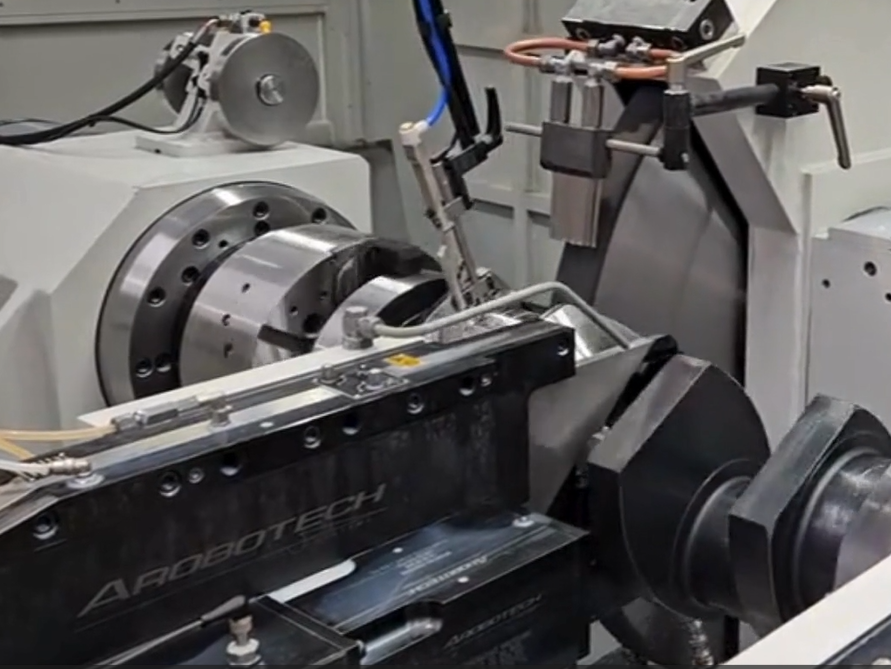
This is where Arobotech’s Grinding AUTO REST® technology becomes critical, not just as a support device, but as an active contributor to process control.
A properly applied grinding AUTO REST® can:
- Maintain continuous contact to reduce part deflection
- Stabilize the workpiece for consistent size control
- Compensate for variation and help preserve concentricity
- Enable more aggressive grinding parameters without sacrificing quality
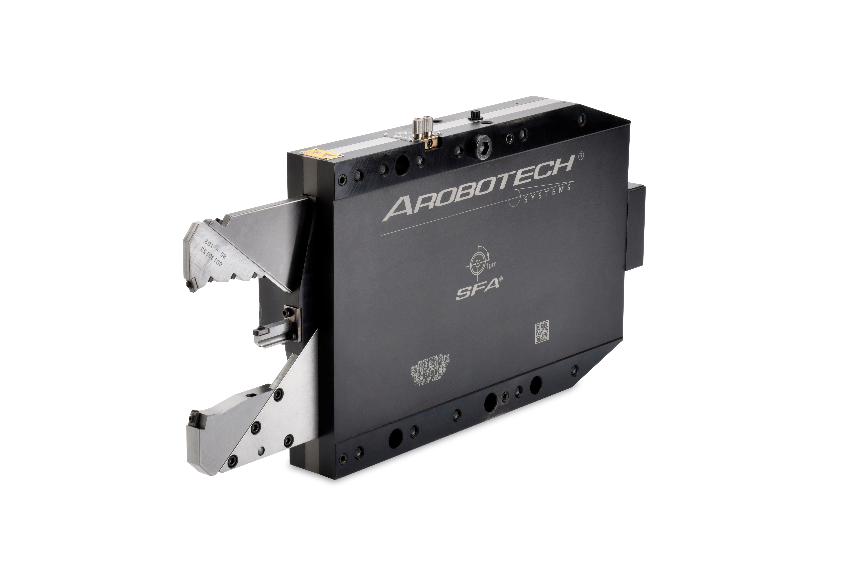
For large crankshaft applications, these are not incremental improvements. They are often the difference between a stable process and ongoing scrap or rework.
Explore Large Crankshaft Solutions
For a closer look at how Arobotech supports large crankshaft grinding applications, including system capabilities, clamping ranges, and application-specific considerations, download our latest guide.
Large Crankshaft Grinding Application Guide
Additional Market Drivers
Beyond power generation and shipbuilding, several other industries are contributing to increased demand for large cylindrical shafts.
Ongoing investment in energy infrastructure, including oil, gas, and LNG, continues to drive demand for large compressors, pumps, and turbine systems. At the same time, aerospace production is ramping up, with companies like GE Aerospace and Rolls-Royce Holdings increasing output of high-precision rotating components.
Remanufacturing and regrinding also play a significant role. High-value crankshafts used in power generation, marine, and heavy industry are often repaired and reused, creating steady demand for precision grinding even outside of new equipment production.
Together, these factors reinforce a broader trend. As equipment grows in size and performance requirements increase, so does the need for reliable, high-precision grinding of large workpieces.
What We’re Seeing at Arobotech
At Arobotech, we’ve seen a clear increase in inquiries and applications centered around large crankshaft grinding.
Customers are asking more detailed questions:
- How do we support heavier parts?
- How do we maintain roundness over long lengths?
- How do we push cycle time without introducing instability?
These are exactly the types of challenges where experience, application knowledge, and the right workholding solution come together.
Looking Ahead
All indicators suggest this trend will continue.
With continued investment in AI infrastructure, expanding power generation capacity, and renewed focus on shipbuilding, along with steady demand from energy, aerospace, and remanufacturing, the need for large, high-precision rotating components is only increasing.
And with that comes a growing need for reliable, repeatable grinding support solutions that can handle the scale and complexity of these applications.
Let’s Talk About Your Application
If you’re working with large crankshafts or other heavy rotating components, the challenges around stability, deflection, and consistency are only increasing.
Arobotech works directly with customers to evaluate applications, optimize support strategies, and ensure reliable grinding performance, even at larger scales.
Start the Conversation
Have a large crankshaft or challenging grinding application?
Our team is ready to help evaluate your process and recommend the right support solution.
